Guides
How to read RSS feeds on Kindle
By Daniel Nguyen · Published · Updated
KTool can follow RSS feeds and send new articles to your Kindle, either individually or together in a magazine. RSS requires a paid KTool plan with RSS access. It is not included in free or trial accounts; some older Basic plans also need an upgrade.
For an occasional article, you can open it from your RSS reader and send it with the browser extension. Set up a feed subscription when you want KTool to collect future posts for you.
Find a feed you want to follow
An RSS feed is a publication's list of recent posts. Look for an RSS link on the publisher's website and copy that address. A homepage URL is not always a feed URL.
For Substack, KTool accepts the publication link. Substack also documents a feed address formed by adding /feed to its publication URL, such as https://your-publication.substack.com/feed. Replace the example publication name with the one you read. See Substack's feed instructions.
For a public example, Hacker News RSS provides https://hnrss.org/frontpage. That feed lists posts reaching the front page. It can be busy, so choose a digest rather than individual delivery if you try it. Its linked articles come from different publishers and will vary in how well they convert.
Start with one feed whose articles you recognize. That makes it easier to compare the source with what arrives on Kindle.
Subscribe in KTool
- Sign in and open RSS.
- Paste the feed URL or Substack publication link, then select Subscribe.
- Check the publication KTool finds.
- Choose its delivery destination and confirm the subscription.
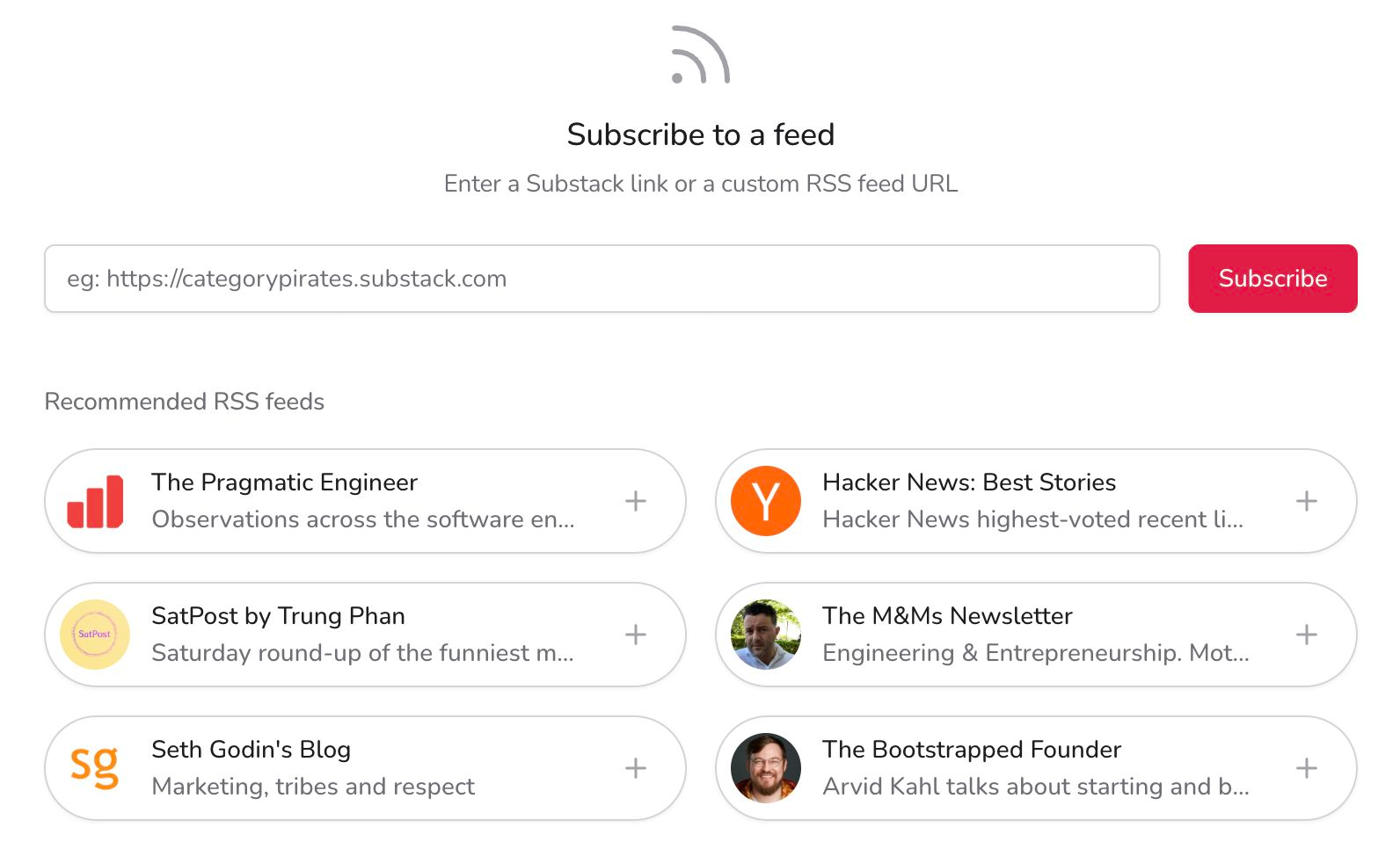
Subscribing is for following new items. Do not expect KTool to import a publication's entire archive. To send an older article, open it and use the browser extension, or use Quick Send for a publicly accessible URL.
Choose individual delivery or a magazine
| Destination | Useful for | What to check |
|---|---|---|
| Send directly to Kindle | An occasional long post | Each item creates a separate delivery |
| Daily Read | News or a regular reading session | Delivery hour and time zone |
| Weekly Read | Essays you save for the weekend | Day of week, hour, and time zone |
| A custom magazine | Keeping a subject or project separate | Its manual or scheduled delivery settings |
Set the schedule in Magazines. For example, you could put a news feed into Daily Read and choose 7 a.m. in your time zone. Articles available before that run can be included; items collected later wait for a later delivery. Feed checks and Kindle delivery take time, so the schedule is not a promise that every article published before 7 a.m. will be on the device at that moment.
RSS settings controls the default destination for new subscriptions. Check an existing feed's own destination when changing your routine. A default setting is easy to mistake for the destination of every feed you already follow.
Full articles, summaries, and paywalls
Publishers choose what goes into their feeds. Some include the article text; others include a short introduction and a link. KTool's result depends on the feed content and the linked page it can access.
A paid subscription in your browser does not give a background RSS fetcher that browser session. If an item stops at a paywall, open the full post while signed in and send it with the extension. For a publication that emails the full paid issue, forwarding that email is another option. The Substack guide explains those choices.
Compare a short Kindle document with both the feed item and the original article. If the source feed contains only a teaser, resubscribing to it will not create the missing text. If the full public article is available but extraction loses paragraphs, report the publication and an example URL to Daniel.
Keep the reading queue useful
A broad feed can produce dozens of articles you would never have picked yourself. Follow a section feed where possible, or use your existing RSS reader to choose individual articles for Kindle.
Use one automatic route per publication. Following its RSS feed and forwarding its newsletter can put the same story into your queue twice. Decide which version contains the text you want, then keep that route.
For an experiment, follow one source for a few deliveries and check how much you actually read. Adjust the feed or delivery frequency before adding more sources.
If a feed is not delivering
Work through the source, queue, and device in that order:
- Confirm that your KTool plan includes RSS and that the subscription is saved.
- Open the publisher's feed and look for a new item. If the feed itself has stopped updating, KTool has no new item to collect.
- Check the feed's destination. For a magazine, inspect its queue and delivery schedule.
- If one public article fails, try its URL in Quick Send. Use the extension if access requires signing in.
- If KTool has sent the document but it is absent from Kindle, check the approved sender and delivery address, then sync the device.
Feed polling runs in the background. Repeatedly subscribing or forwarding the same article while waiting can make diagnosis harder and create extra copies.
Using calibre or an existing RSS reader
If you already manage ebooks in calibre, its custom news recipes let you combine feeds and adjust how article pages are extracted. That suits readers who want to maintain their own extraction setup. You still need to arrange transfer of the resulting ebook to Kindle.
If you prefer to select every story, keep browsing in your RSS reader and send only the articles you want. KTool's recurring feed delivery is useful when the publication itself is a good enough filter for your reading queue.